
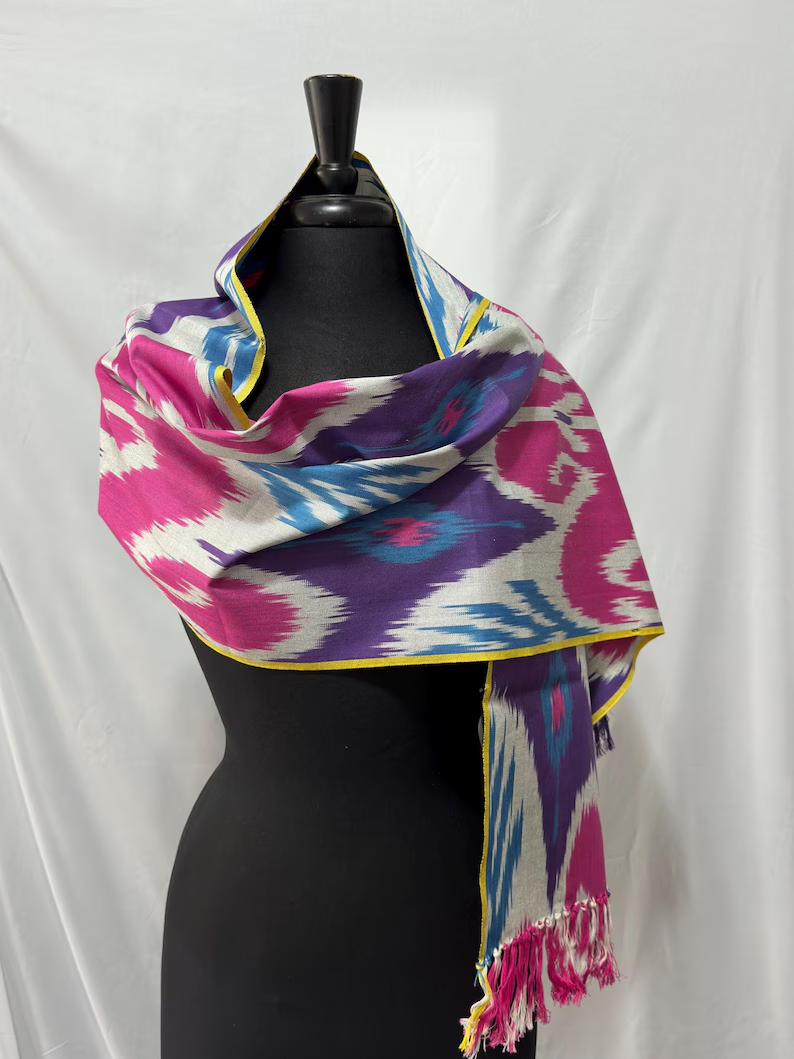
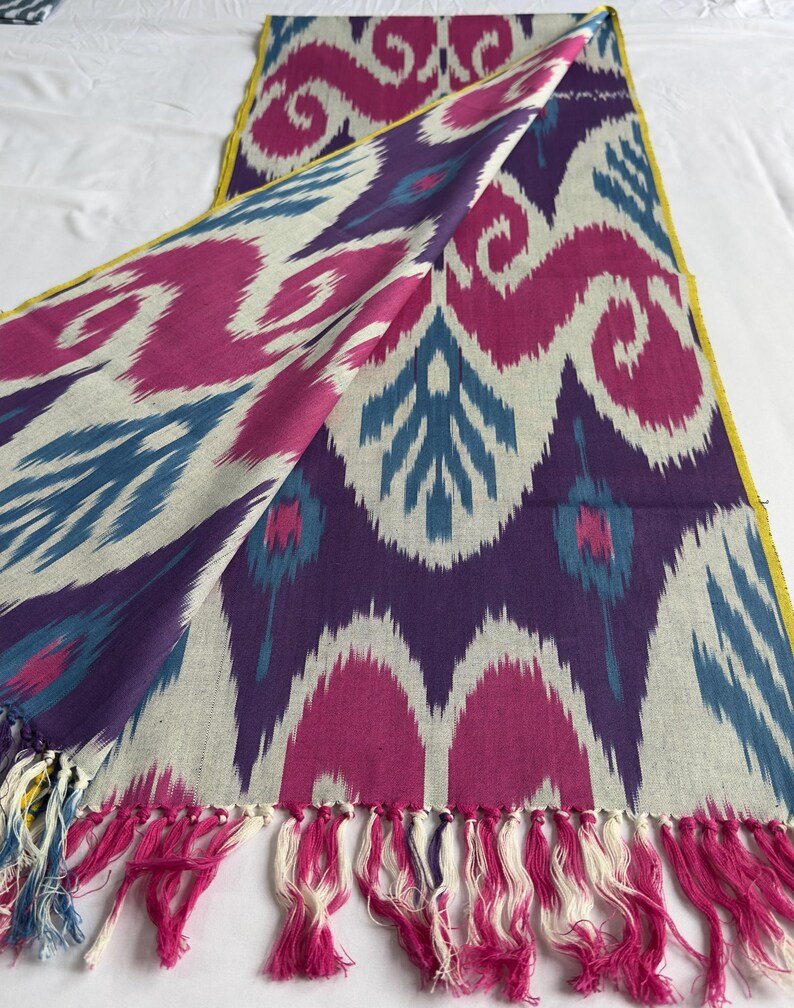
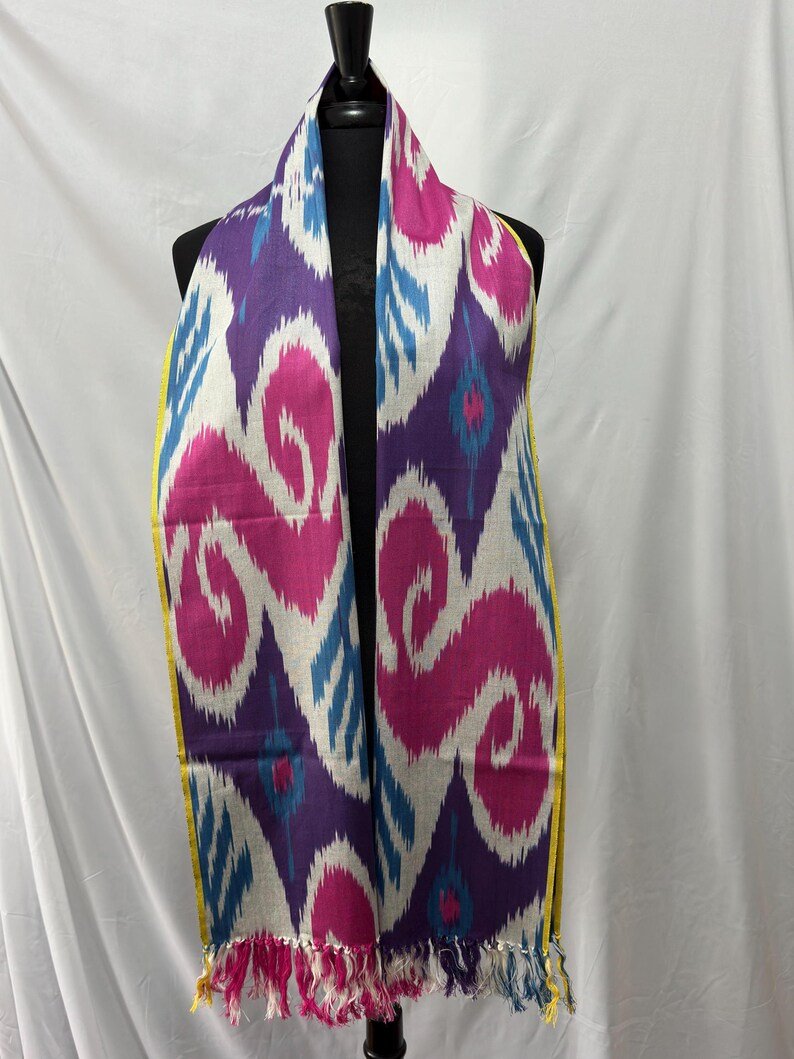
Recommendations for caring for ikat fabric:
1. Hand wash in cold water using a mild detergent to preserve the vibrant colors and delicate patterns of the fabric.
2. Avoid soaking for long periods to prevent the dye from bleeding or fading, especially with natural dyes.
3. Air dry in the shade, away from direct sunlight, as prolonged exposure can cause the colors to fade.
4. Iron on low heat while the fabric is slightly damp, placing a cloth between the ikat and the iron to protect the fibers.
History:
Ikat is a traditional textile made through a complex dyeing technique in which the threads are dyed before weaving to create intricate patterns. The process involves binding and dyeing sections of the yarn, then weaving them into fabric. This technique is used in various cultures, including regions in Southeast Asia, South America, and Central Asia.
Historically, ikat fabric often symbolized status and cultural identity due to its labor-intensive creation. The patterns and colors vary by region, reflecting local traditions and beliefs.
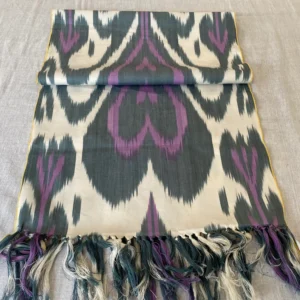
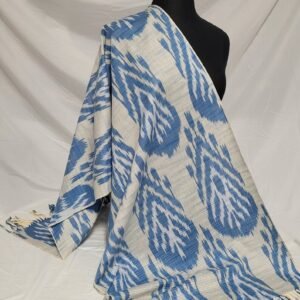
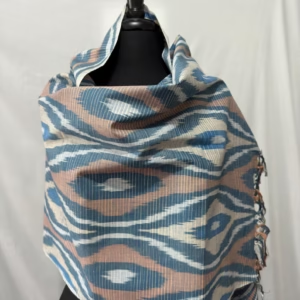
In Tajikistan and Persia, ikat fabric holds significant cultural and historical importance. In these regions, ikat is known as “abrbandi” or “abr,” meaning “cloud,” symbolizing the blurred, cloud-like designs typical of this fabric. The tradition of ikat weaving in Central Asia, particularly in Tajikistan and parts of Persia, dates back centuries.
In Tajikistan, ikat was historically made from silk and cotton and was often reserved for clothing worn by the elite, including robes, scarves, and ceremonial attire. The intricate patterns and vibrant colors were associated with wealth and status. Persian ikat, similarly, reflected luxury and artistic heritage, particularly during the 16th-18th centuries when textiles were a major cultural export.
The ikat traditions of both regions have influenced neighboring cultures, creating a rich legacy of textile craftsmanship that continues to be appreciated today.
Reviews
There are no reviews yet.