
Suzani – (textile)
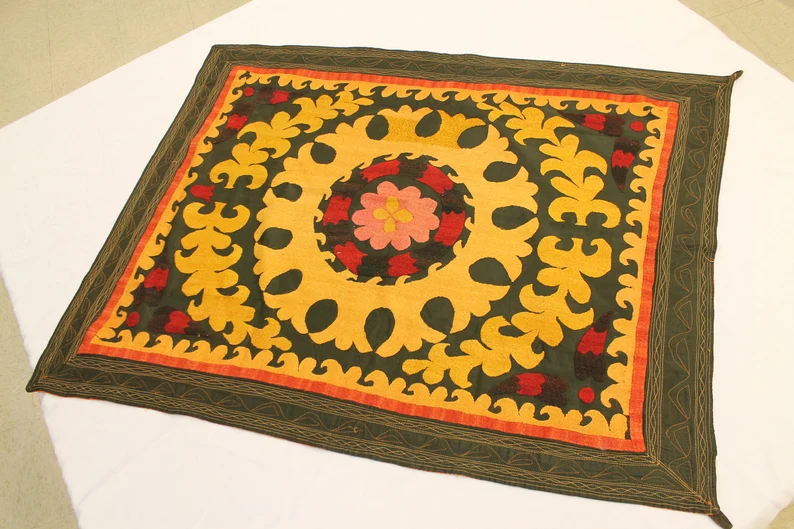
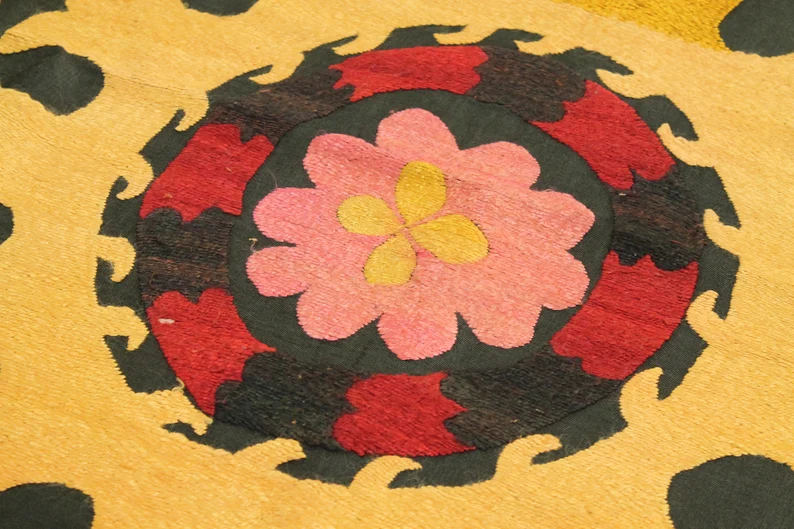
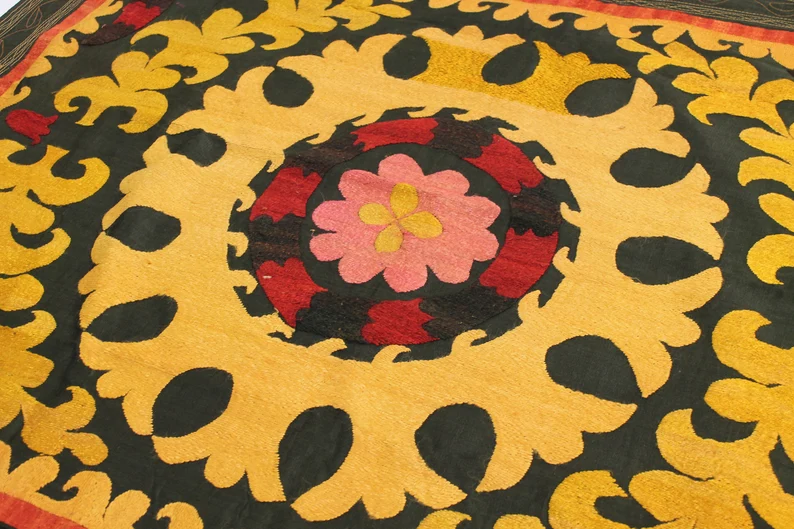
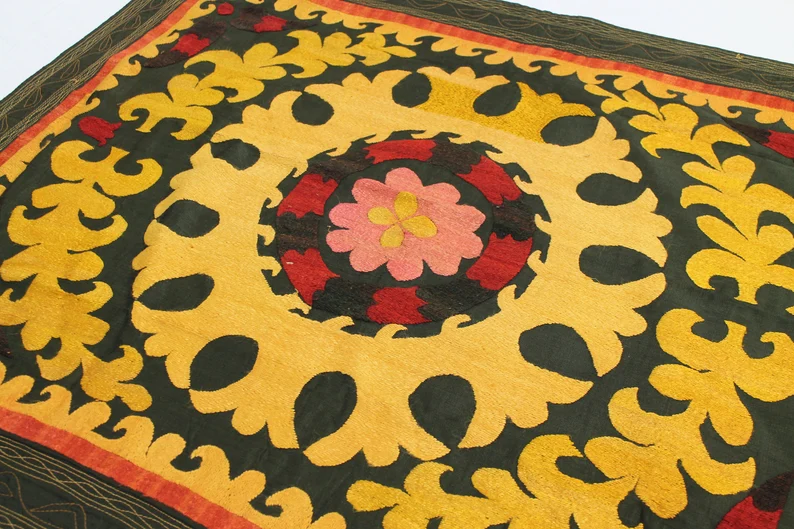
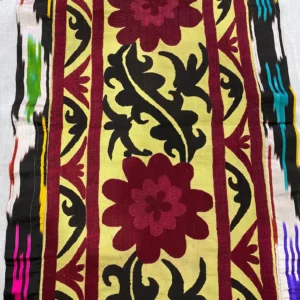
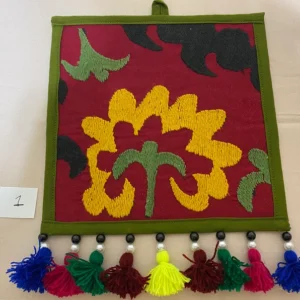
Tajiks believed that the Sun gives warmth and happiness to the home and people’s lives. It is a source of life and energy for nature as well. The symbol of the sun is expressed in this Suzani in a type of big, round flower.
This Suzani was prepared in the 1960s in North part of Tajikistan, Istaravshan city.
This Suzani was reconstructed by the National Tajik Jurabs in 2018 in Dushanbe city. It was boiled with the skins of nuts, which made it stronger and ready for daily use. Usually, the color of Suzanis would drain away, but after reconstructions, this Suzani was changed with color sustained, without changing the beautiful and original design.
For more information and background on Suzanis, below is the description of a Suzani from Wikipedia:
“Suzani is a type of embroidered and decorative tribal textile made in Tajikistan and other Central Asian countries. Suzani is from the Persian سوزن Suzan, which means needle. The art of making such textiles in Iran is called سوزندوزی Suzandozi (needlework).
Suzani usually has a cotton (sometimes silk) fabric base, which is embroidered in silk or cotton thread. Chain, satin, and buttonhole stitches are the primary stitches used. There is also extensive use of coaching, in which decorative thread laid on the fabric as a raised line is stitched in place with a second thread. Suzanis are often made in two or more pieces, which are then stitched together.
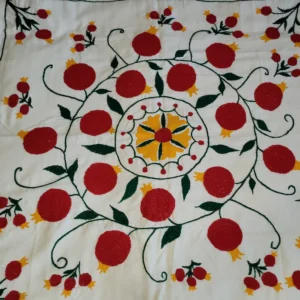
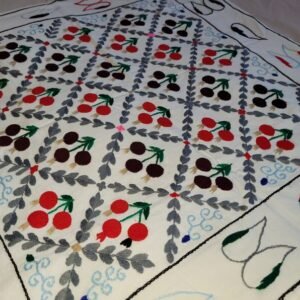
Popular design motifs include sun and moon disks, flowers (especially tulips, carnations, and irises), leaves and vines, fruits (especially pomegranates), and occasional fish and birds.[1]
Suzanis were traditionally made by Central Asian brides as part of their dowry and were presented to the groom on the wedding day.”
Reviews
There are no reviews yet.